
Caring for What God Has Placed in Our Hands
November 15, 2026
You want your children and grandchildren to grow into people who notice what needs care and are willing to help.
But a child may walk past a muddy shovel without a second thought. We see a tool that needs cleaning before it rusts. They see a job that is finished. How do we help them see the difference without turning every afternoon into another reminder?
Begin with one thing to tend, and tend it together.
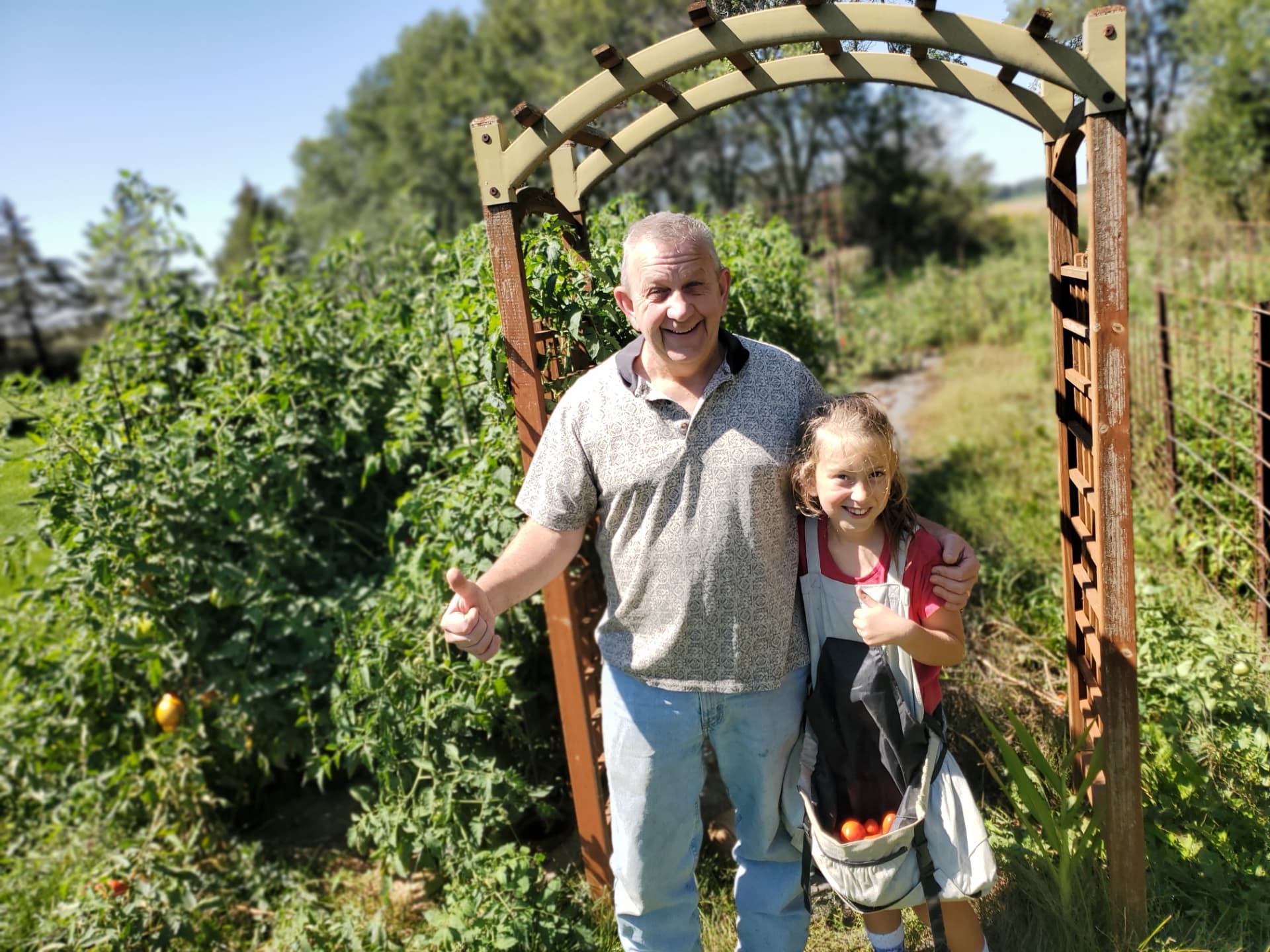
This picture of Jerry in the garden reminds me that a harvest is more than what we carry inside. There is also what a child carries away: time with someone who loves them, a useful job, and a little more understanding of how to care for what grows.
I know it can be easier to put the shovel away ourselves. Some days we are tired, and one more explanation feels like a lot. We do not have to teach every lesson at once. One small invitation is enough to begin: "Come help me take care of this."
More Than Another Chore
Stewardship is a big word for something that begins close to home. We water a thirsty plant. We return a borrowed tool. We mend what can be mended. We treat what we have as something entrusted to us, not simply something to use and leave behind.
Genesis 2:15 tells us that God placed the man in the garden to work it and take care of it. The garden was a gift, and tending it was meaningful work. Work and care belonged together from the beginning.
Children deserve the chance to learn that their care matters. A pot on the steps, a bicycle sheltered before rain, or a book returned to its shelf can make that lesson visible. We do not need acreage or a perfect garden. We need something within reach and a reason to care for it.
"We are watering this plant so it has what it needs to keep growing" gives a small task a purpose.
Stay Beside Them While They Learn
In What Builders Grow, eight-year-old Jacob joins Grandpa to repair a broken fence at Riverstone Ranch. Wire snaps, tools slip, and Trouble the cow adds trouble of her own. Jacob needs more than enthusiasm and oversized hand-me-down gloves. He needs someone willing to help him learn the next step.
That same patient guidance belongs in the garden. A child who leaves a tool outside may not yet understand that putting it away is part of the job. Instead of assuming they should know, we can show them.
"The digging is done. Now let's wipe the dirt off and put the shovel where we can find it next time."
We are not asking for a perfect beginning. We are helping them practice a habit of care.
The coming story Sticks with Promise looks further ahead, as a family plants young trees whose fruit will take time. Stewardship holds both kinds of work: caring for what serves us today and tending what may bless someone tomorrow.
Three Small Steps for Caring Hands
- Notice together. Choose one plant or small growing place. Ask, "What needs care here?" Let your child look at the soil, leaves, and surroundings before you offer the next step.
- Do one useful thing. Water if the plant needs it, gather litter, or help with a task suited to your child's age. Stay close, use child-safe tools, and leave sharp tools and garden chemicals in adult hands. Explain who or what their work helps.
- Finish with care. Wipe the tool, return it to its place, and decide when to check the plant again. Thank your child for something specific: "You remembered to put the watering can away so we can use it next time."
If you would like to keep the memory, invite your child to draw what you tended or record it in your Faithful Hands Family Guide. Its "Who Taught You?" interview printable can help you share who first taught you to care for a garden or a useful tool.
Choose One Thing to Tend This Week
Set aside fifteen minutes with your child or grandchild. Choose one growing place, follow the three steps, and return to it together next week. One pot is enough.
When we always finish the work for children, they can miss the chance to notice what needs attention and discover that they can help. Tools left outside can rust. Plants left untended can struggle. More importantly, the habit of caring needs practice if it is going to grow.
That is not a reason for guilt about yesterday's busy afternoon. It is an invitation to make room today.
Over time, a child may begin to notice a dry pot without being asked, put a tool away with care, or offer to help someone else. Those small choices are signs of something worth growing: gratitude, responsibility, and a willingness to serve.
We cannot make every seed grow or keep every useful thing from wearing out. We can be faithful with what God has placed in our hands today, and teach our children that their hands have a part in caring for it too.
I pray your family is blessed by what you tend together, both in the garden and in one another.
Rachel Van Essen
Faithful Hands Books
Before they're grown, show them how.